

By Leesa Jeffcoat AM
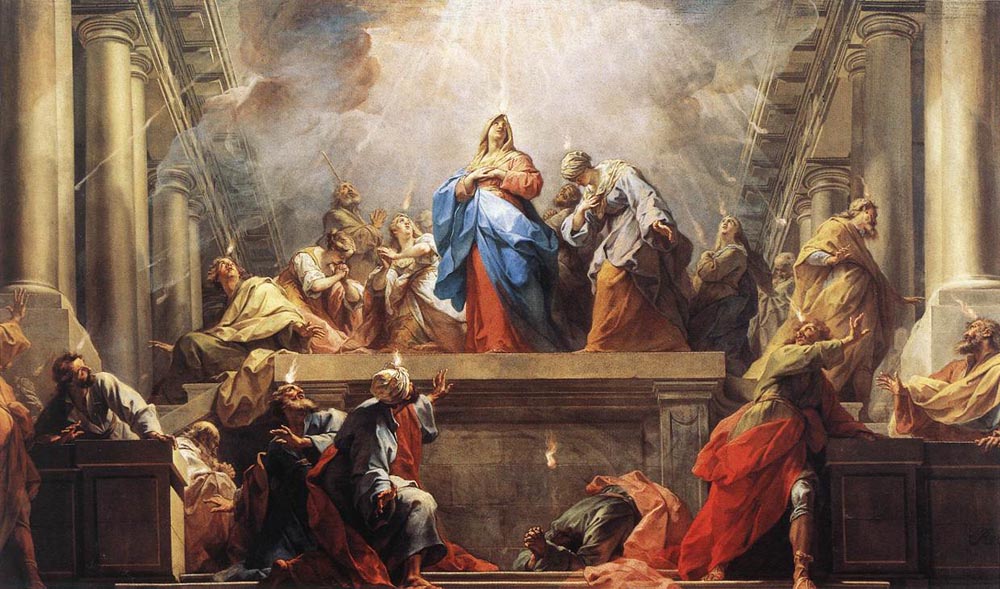
“When the day of Pentecost had come …” Acts 2:1
What comes to mind when you hear the word “Pentecost”?
Perhaps small flames of fire, or the colour red, or hymns to the Holy Spirit.
In Rockhampton, we gather on Pentecost Sunday afternoon at St Joseph’s Cathedral for an ecumenical service with people from many churches sharing their gifts, their prayers, their reflections and their music.
It is a unique and inspiring afternoon.
But put aside, for a moment, what you already know about Pentecost. Just look again at those opening words from the Acts of the Apostles.
“Pentecost” is not a Hebrew word. It comes from the Greek, the language Acts was written in. And thanks to the Scripture scholars of our Church, we know that this “day” was one of three festivals when Jewish men travelled to Jerusalem for a harvest festival known as the “Feast of Weeks”, celebrated fifty days after Passover.
Over time, it also became a celebration of the Torah given to Israel on Mt Sinai.
When the Lord came to meet his people on Mt Sinai there was “thunder and lightning”, “fire” and “smoke”. Does that sound similar to the “mighty wind” and the “tongues” of “fire” described in Acts when the Holy Spirit came down on the first followers of Jesus?
What an amazing God!
For the fifty days since Easter, we have read at Mass about the lives of the first Christians. Their stories are full of incredible speeches, thousands of baptisms, and miraculous healings in the face of fierce opposition and persecution.
I love the summary provided near the end of Chapter 2 of Acts, "they held steadfastly to the apostles' teaching, and fellowship, to the breaking of the bread and to the prayers".
That single sentence is the blueprint for everyone who follows Jesus.
Teaching, fellowship, the breaking of bread, and prayer.
During Lent, I was blessed to be part of a small group who met each week to read commentaries on the Scripture, to pray the psalms, and to reflect together as we prepared to celebrate the Eucharist on Sunday.
There was also plenty of “fellowship”; cuppas and cake on feast days and birthdays. I hope that we will be able to continue to meet and pray in the weeks ahead, because it was so enriching.
This is what Eucharistic renewal looks like at ground level: people gathering around the Scriptures, the prayers, and the bread, the way the first Christians did 2000 years ago.
And now I look forward to the feast of Corpus Christi, when the Church gives thanks for the great gift at the very heart of Eucharist28.
The treasures shared with us by the saints and the theologians of our Church are extraordinary, and the Eucharist28 website is a wonderful place to begin exploring them.
New resources are released each month for parishes, schools, families and individuals on the journey to 2028.
You can find them here.
So in this season of the Holy Spirit, be like the early Christians.
Hold steadfastly to the teaching of the Apostles and their successors.
Keep praying. Keep celebrating the Eucharist.
And may you experience real “fellowship” in your families, your communities, and your parish.
May the Holy Spirit continue to guide and inspire us. Amen.
Leesa Jeffcoat AM is the Eucharist28 Representative in the Diocese of Rockhampton